
 EN
EN
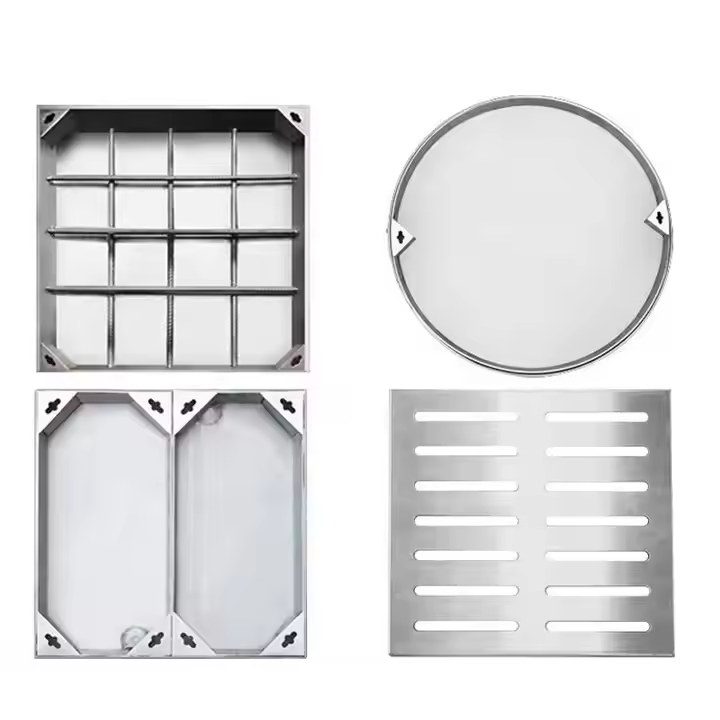
When engineers and facility managers evaluate infrastructure components, reliability is rarely a single measurable value — it is the combined result of material choices, structural geometry, load distribution, and long-term environmental resistance. A stainless steel manhole cover stands out in this context precisely because it brings together multiple strength-related features that other materials simply cannot replicate in the same combination. Understanding what those features are — and why they matter — is the first step toward making confident procurement and specification decisions.
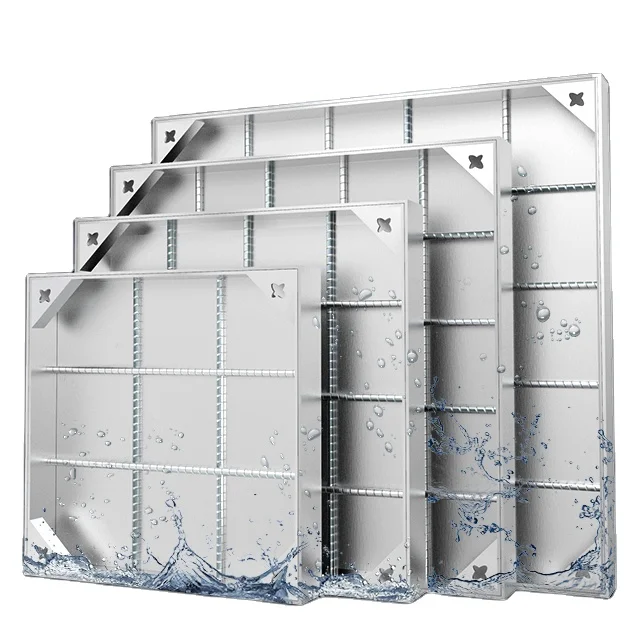
The demand for durable access covers in municipal, commercial, and industrial environments has intensified as infrastructure loads have grown heavier and maintenance budgets have become tighter. A stainless steel manhole cover addresses these pressures by delivering strength characteristics that translate directly into service life, safety performance, and lower total ownership costs. This article examines the specific strength features that set stainless steel manhole covers apart and explains how each feature contributes to real-world reliability.
Material-Level Strength Advantages of Stainless Steel
Tensile Strength and Yield Performance
The inherent tensile strength of stainless steel is one of the primary reasons a stainless steel manhole cover outperforms alternatives made from cast iron or polymer composites under dynamic loading. Austenitic grades such as 304 and 316 offer tensile strengths typically ranging from 515 to 620 MPa, providing a substantial safety margin when covers are subjected to vehicular wheel loads, impact from dropped objects, or the repeated stress cycling of high-traffic zones.
Equally important is yield strength, which determines how much stress the cover can absorb before permanent deformation occurs. A stainless steel manhole cover maintains its original geometry even after thousands of load cycles, which is critical for flush-mounted or invisible cover designs where dimensional stability directly affects the safety of pedestrians walking over the surface. Covers that deform under load create trip hazards and can compromise the sealing integrity of the access point beneath.
The combination of high tensile and yield strength also means that a stainless steel manhole cover can be engineered with thinner cross-sections than cast iron equivalents while still meeting or exceeding the same load class certifications. This allows for weight reduction without sacrificing structural performance, which simplifies installation and reduces labor costs during site work.
Fatigue Resistance Under Cyclic Loading
Fatigue failure is a concern in any structural component exposed to repeated loading and unloading cycles over its service life. A stainless steel manhole cover installed in a roadway, car park, or logistics yard experiences this type of cyclic stress every time a vehicle passes over it. Stainless steel's crystalline microstructure and work-hardening characteristics give it superior fatigue resistance compared to brittle materials like grey cast iron, which can develop micro-cracks that propagate slowly until sudden fracture occurs.
This fatigue resistance is not merely theoretical. In practice, it means that a stainless steel manhole cover installed in a heavy-traffic driveway will remain structurally sound for decades without developing the hairline cracks that frequently appear in cast iron covers under similar conditions. The result is a longer inspection interval, fewer emergency replacements, and reduced risk of a cover failure causing injury or property damage.
Structural Design Features That Enhance Load Capacity
Ribbed and Reinforced Underside Geometry
Material strength alone does not determine the reliability of a stainless steel manhole cover. The way that material is shaped and structured plays an equally important role in how loads are distributed and absorbed. Most high-quality stainless steel manhole covers incorporate a ribbed or grid-pattern underside that dramatically increases the effective section modulus of the cover without adding proportional weight.
These ribs act as integrated beams, channeling applied loads away from the center of the panel and distributing stress across a larger area and into the frame or surrounding substrate. When a vehicle wheel applies a concentrated load to the surface of a stainless steel manhole cover, the ribbed geometry ensures that no single point experiences the full force. This load distribution mechanism is what allows relatively thin stainless steel panels to carry classified loads up to C250, D400, and in some engineered designs, beyond.
The precision with which these ribs are formed matters significantly. Laser-cut and press-formed ribs maintain consistent depth and spacing tolerances that stamped or hand-formed components cannot always achieve. When the geometry is consistent, load distribution is predictable, and the safety factor calculations used in engineering specifications remain valid throughout the product's service life.
Frame-to-Cover Fit Precision and Contact Bearing Area
A stainless steel manhole cover is only as strong as its connection to the surrounding structure. If the cover sits loosely in its frame, dynamic loads create impact forces that are far more damaging than static loads of the same magnitude. This is why the dimensional precision of the cover-to-frame interface is a critical strength feature in any high-quality stainless steel manhole cover system.
Precision-machined or CNC-formed bearing surfaces ensure that the cover rests evenly on the frame ledge, distributing its own weight and applied loads across the maximum possible contact area. This minimizes point loading at the frame corners, which is where fracture typically initiates in poorly fitted covers. A well-fitted stainless steel manhole cover also eliminates the rattling and vibration that wears down the frame contact surfaces over time, preserving the fit tolerance for the long term.
For invisible or flush-mounted designs, the precision of this fit takes on additional importance. The cover must sit exactly level with the surrounding floor or pavement finish to function as intended. Stainless steel's machinability and dimensional stability across temperature ranges make it far more suitable for tight-tolerance applications than cast iron or composite alternatives.
Corrosion Resistance as a Structural Strength Preserving Feature
How Corrosion Degrades Structural Performance Over Time
Corrosion is not merely a surface aesthetic problem — it is a mechanism by which structural strength is progressively degraded. When a manhole cover corrodes, metal is lost from load-bearing cross-sections, reducing the effective thickness and section modulus of the component. A cover that met its load class specification when new may fall well below that specification after several years of corrosion damage in a chemically aggressive environment.
This is a well-documented failure mode for mild steel and grey cast iron covers installed in coastal zones, chemical processing facilities, or areas where de-icing salts are used on roads. The passive oxide layer that forms naturally on a stainless steel manhole cover prevents this mechanism from occurring under most service conditions. The chromium content in stainless steel — typically a minimum of 10.5% by mass — creates a self-repairing barrier that blocks chloride ions and moisture from reaching the base metal.
The practical implication is straightforward: a stainless steel manhole cover retains its as-manufactured structural dimensions and strength properties throughout a service life that can span 20 to 30 years or more in demanding environments. The strength features that were engineered into the cover at the point of manufacture remain intact and functional, rather than being gradually consumed by oxidation.
Grade Selection for Environment-Specific Strength Retention
Not all stainless steel grades offer identical corrosion resistance, and specifying the correct grade is part of ensuring that the strength features of a stainless steel manhole cover are retained over time. Grade 304 is the most widely used option for general municipal and commercial applications, offering excellent resistance to atmospheric corrosion, water, and a broad range of chemicals. It is suitable for most urban environments and indoor or covered installations.
In coastal locations, chemical plants, or areas with high chloride exposure, grade 316 provides enhanced corrosion resistance through the addition of molybdenum, which significantly improves resistance to pitting and crevice corrosion. Specifying 316-grade stainless steel for a manhole cover in these environments is not an upgrade for appearance — it is a structural decision that determines whether the load-bearing capacity of the cover will be preserved over the full intended service life.
The relationship between grade selection and long-term strength retention makes the initial specification of a stainless steel manhole cover one of the most consequential decisions in a project's infrastructure planning stage. Getting this choice right eliminates the premature replacement cycles that drive up total lifecycle costs and introduce service disruption risks.
Surface and Anti-Slip Features That Maintain Functional Integrity
Surface Pattern Engineering for Traction and Structural Contribution
The top surface of a stainless steel manhole cover serves two functions simultaneously: it provides the walking or driving surface that users interact with directly, and it contributes to the overall stiffness of the panel through its embossed or etched pattern geometry. Anti-slip surface patterns — whether diamond-pressed, brushed, or grid-etched — are not purely functional safety features. They also act as micro-stiffeners that resist local deflection under concentrated loads.
For applications where the stainless steel manhole cover must be flush-mounted in a tiled or polished floor, the surface finish needs to integrate visually while still providing adequate traction under wet conditions. This balance between aesthetic integration and functional safety is one of the defining engineering challenges in specifying stainless steel manhole covers for commercial interiors such as shopping centres, hotels, and transit terminals.
Properly designed surface patterns also shed water efficiently, preventing pooling that could create slip hazards or freeze during cold weather and apply thermal expansion stress to the cover surface. The contribution of the surface geometry to overall panel stiffness is often underestimated in basic specifications but becomes evident in comparative load testing where covers with well-engineered surface patterns consistently outperform flat-panel equivalents of the same thickness.
Tile or Infill Retention Strength in Invisible Cover Designs
A significant application category for the stainless steel manhole cover is the invisible or recessed design, where the cover frame accepts a tile or stone infill that matches the surrounding floor finish. In these designs, the structural integrity of the cover depends partly on the infill retention system — the mechanical interlocking or clamping arrangement that holds the fill material in place under repeated loading.
Stainless steel invisible covers use precisely formed inner frames with tight tolerance recesses that grip the infill securely without relying on adhesive bonding alone. This mechanical retention ensures that even if adhesive degrades over time in wet environments, the tile or stone cannot become dislodged under foot or wheel traffic. The strength of this retention system is a critical safety feature in high-footfall public spaces where a loose tile in a floor-level cover would create an immediate injury risk.
The dimensional stability of the stainless steel frame across temperature cycles is essential for maintaining infill retention strength over time. Unlike frames made from materials with higher thermal expansion coefficients, a stainless steel manhole cover frame does not repeatedly clamp and loosen around the infill as temperatures change, which would progressively loosen the mechanical grip and compromise the system's integrity.
FAQ
What load classes can a stainless steel manhole cover typically meet?
A stainless steel manhole cover can be engineered and tested to meet multiple load classes depending on its design, thickness, and reinforcement geometry. Common certifications include A15 for pedestrian areas, B125 for car parks, C250 for road verges and slow-traffic zones, and D400 for full roadway applications. The specific load class achieved depends on the structural design of the cover rather than stainless steel as a material alone, which is why reviewing the load certification of a specific product rather than assuming a generic rating is always the recommended approach.
Does the grade of stainless steel affect the mechanical strength of the cover?
The mechanical strength differences between 304 and 316 stainless steel are relatively minor in the context of load-bearing performance — both grades offer similar tensile and yield strength values. The more significant difference lies in corrosion resistance, which determines how well that mechanical strength is preserved over time. In highly corrosive environments, 316 grade is the preferred specification for a stainless steel manhole cover because it ensures that the cover's structural cross-section remains intact across a longer service life, effectively maintaining its original strength rating throughout its operational period.
How does a stainless steel manhole cover compare to cast iron in terms of impact resistance?
Stainless steel offers significantly better impact resistance than grey cast iron because it is a ductile material rather than a brittle one. When a cast iron manhole cover receives a sharp impact load — such as from a heavy vehicle wheel striking the edge at speed — it can fracture suddenly and without warning. A stainless steel manhole cover under the same impact loading will deform plastically before reaching fracture, providing visible warning of overload and preventing the sudden catastrophic failure that creates immediate safety hazards. This ductility is one of the most practically important strength features in high-traffic or abuse-prone installation environments.
What maintenance is needed to preserve the strength of a stainless steel manhole cover?
One of the practical advantages of a stainless steel manhole cover is that its strength preservation requires minimal active maintenance compared to painted or coated alternatives. Routine cleaning to remove surface contamination — particularly chloride deposits in coastal or de-iced road environments — is the primary maintenance action needed to ensure the passive oxide layer functions correctly. Inspecting the cover-to-frame fit annually to check for debris buildup or deformation is also recommended, as maintaining the proper contact bearing area ensures that loads continue to be distributed as originally designed. No repainting, recoating, or surface treatment is required for standard stainless steel grades in most applications.
Table of Contents
- Material-Level Strength Advantages of Stainless Steel
- Structural Design Features That Enhance Load Capacity
- Corrosion Resistance as a Structural Strength Preserving Feature
- Surface and Anti-Slip Features That Maintain Functional Integrity
-
FAQ
- What load classes can a stainless steel manhole cover typically meet?
- Does the grade of stainless steel affect the mechanical strength of the cover?
- How does a stainless steel manhole cover compare to cast iron in terms of impact resistance?
- What maintenance is needed to preserve the strength of a stainless steel manhole cover?