
 EN
EN
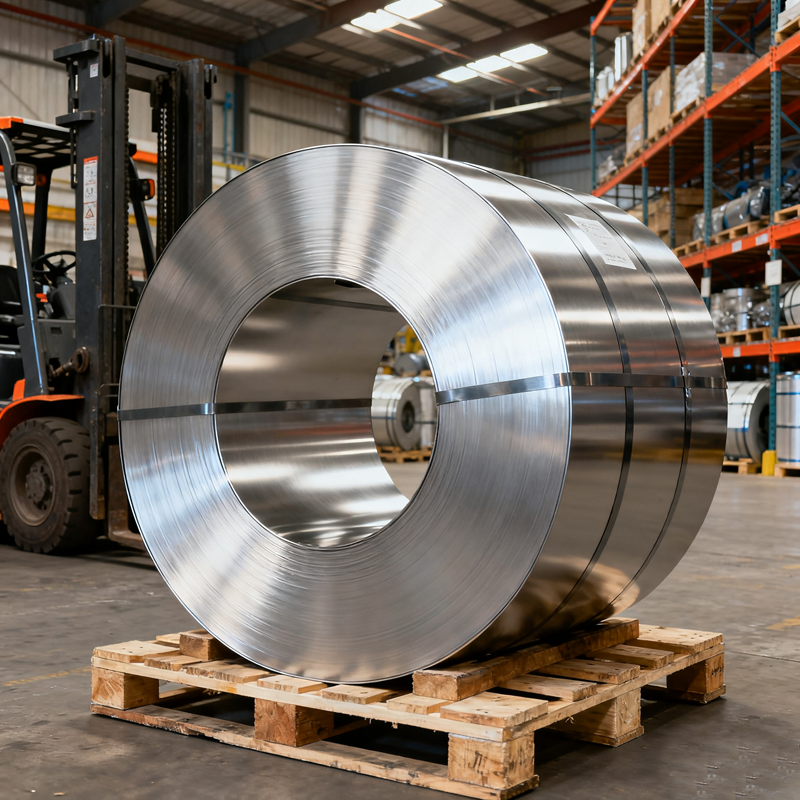
In modern metal fabrication and industrial manufacturing, dimensional accuracy and surface integrity are not optional — they are fundamental requirements that determine whether a component performs as designed or fails under operational stress. The cold-rolled coil has emerged as one of the most reliable solutions for achieving tight tolerances and superior surface finishes in metal products across a wide spectrum of industries. Understanding how this material achieves such consistently high standards is essential for procurement engineers, product designers, and quality managers who depend on steel performance.
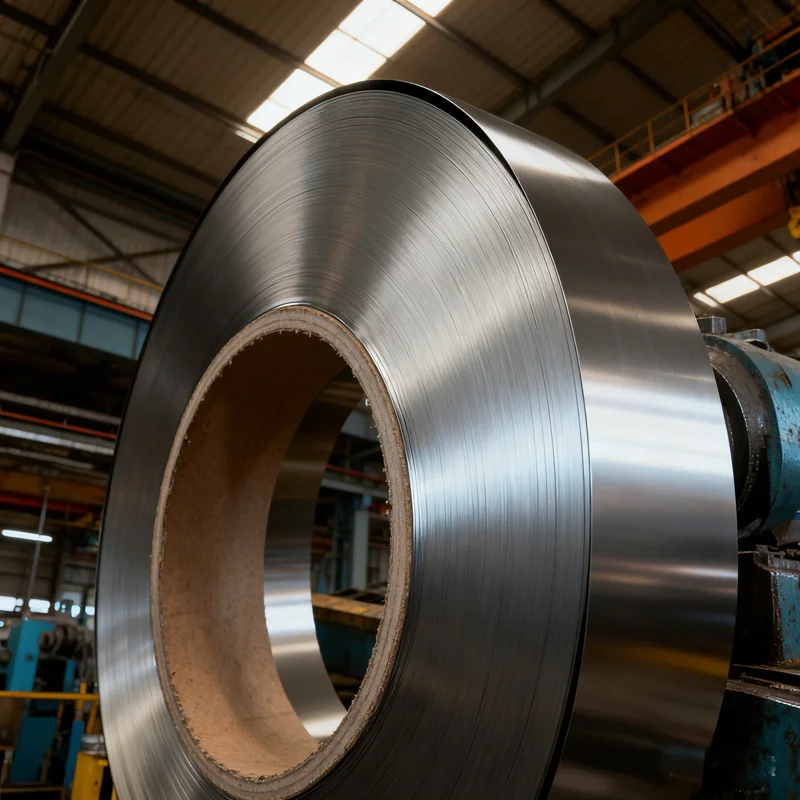
The cold-rolled coil production process involves passing hot-rolled steel through a series of rolling mills at room temperature, applying significant compressive force to reduce thickness, refine grain structure, and produce a finished surface that hot-rolled material simply cannot match. The result is a product characterized by tighter thickness tolerances, improved mechanical properties, and a smooth, clean surface that reduces downstream processing requirements. This article explores the specific mechanisms through which cold-rolled coil achieves these improvements and explains why this matters so much for industrial applications.
The Cold-Rolling Process and Its Mechanical Foundation
How Room-Temperature Rolling Changes Steel Structure
The defining characteristic of cold-rolled coil production is that rolling occurs at or near room temperature rather than at the elevated temperatures used in hot rolling. Because the steel is not heated above its recrystallization temperature during processing, the metal grains are compressed and elongated rather than reformed freely. This work hardening effect fundamentally changes the microstructural characteristics of the steel, producing a material with higher yield strength, improved hardness, and reduced internal grain irregularity.
When steel is processed into cold-rolled coil, the rolling force must overcome the metal's natural resistance at ambient temperature, which requires substantially more energy per pass than hot rolling. However, this effort delivers a structural payoff: the compressed grain structure results in improved uniformity throughout the material's cross-section. This uniformity is directly responsible for the dimensional consistency that makes cold-rolled coil the preferred choice for precision-stamped parts, enclosures, and thin-gauge structural components.
The reduction in thickness achieved through cold rolling is carefully controlled in successive passes, with each pass applying a calculated percentage of reduction. This incremental approach allows producers to reach precise final thicknesses while maintaining flatness and controlling internal stress distribution. The resulting cold-rolled coil exhibits dimensional repeatability that is critical when components are produced in large volumes and must fit together with minimal variation.
Annealing and Skin Passing as Finishing Steps
After the initial cold-rolling passes, the steel is typically annealed — a controlled heating and cooling cycle — to relieve internal stresses introduced during work hardening and to restore ductility. This step is crucial because heavily work-hardened cold-rolled coil, while precise, can become too brittle for forming operations. Annealing brings the material back into a formable condition without sacrificing the dimensional precision and surface refinement already achieved.
Following annealing, many cold-rolled coil products undergo a skin-pass or temper-rolling step. This final light reduction — typically just a fraction of a percent — serves several purposes. It removes the yield point elongation that can cause stretcher strains during forming, it further improves surface smoothness, and it helps maintain the flatness of the coil. The skin-pass step is often where specific surface texture characteristics are imparted, as the work rolls used in this final stage directly influence the surface finish that end users will receive.
The combination of controlled cold reduction, annealing, and skin passing creates a cold-rolled coil that balances strength, formability, and surface quality in a way that hot-rolled products cannot replicate without additional post-processing. This integrated process chain is what sets cold-rolled coil apart as a precision material rather than simply a thinner version of hot-rolled strip.
Dimensional Precision: How Cold-Rolled Coil Achieves Tight Tolerances
Thickness Consistency Across the Entire Coil Length
One of the most valued attributes of cold-rolled coil is its exceptional thickness consistency from the leading edge to the trailing edge of a coil and from coil to coil within a production campaign. Modern cold rolling mills are equipped with automatic gauge control systems that continuously measure and adjust the rolling force and roll gap in real time. This closed-loop feedback mechanism means that any deviation in incoming thickness or hardness is compensated before it translates into a thickness variation in the finished cold-rolled coil.
The practical significance of this consistency cannot be overstated for precision manufacturing. When a press shop is stamping thousands of identical components per hour, even a small variation in material thickness can cause tool wear, dimensional scatter in finished parts, and increased scrap rates. Cold-rolled coil with tightly controlled gauge allows stamping operations to run with consistent forming loads, predictable springback behavior, and repeatable part dimensions — all of which reduce the cost of quality management on the production floor.
Thickness tolerances for cold-rolled coil are typically specified in fractions of a millimeter, with standard tolerances considerably tighter than those of hot-rolled equivalents. For applications requiring particularly demanding precision — such as automotive body panels, electronic enclosures, or precision tubing feedstock — specialized cold-rolled coil can be produced to even narrower tolerance bands through additional process controls and more frequent calibration of mill equipment.
Width Tolerance and Edge Quality
Dimensional precision in cold-rolled coil extends beyond thickness to include width accuracy and edge condition. After rolling, coils are often slit to precise widths, and the cold-rolling process contributes to this slitting quality by producing a more uniform material that cuts cleanly and predictably. The controlled internal stress distribution in a well-processed cold-rolled coil means that slit edges remain straight and burr-free more consistently than is possible with hot-rolled or unannealed materials.
Edge quality matters significantly when cold-rolled coil is used as feedstock for roll-forming, tube welding, or progressive die stamping. Any waviness or camber in the edge of the strip can cause tracking problems on production equipment, leading to misaligned parts or coil handling issues that interrupt production flow. Cold-rolled coil processed with appropriate flatness and edge controls minimizes these downstream disruptions and contributes to overall manufacturing efficiency.
Width tolerances on slit cold-rolled coil are typically held to very small deviations, enabling end users to design their tooling and processes around a reliably consistent input material. This allows tighter nesting of stamped blanks, more efficient use of material, and reduced scrap — all direct economic benefits that validate the premium associated with precision cold-rolled coil over less controlled alternatives.
Surface Quality: The Defining Advantage of Cold-Rolled Coil
How Cold Rolling Produces Superior Surface Finish
The surface quality of cold-rolled coil is perhaps the most visually and functionally obvious advantage over hot-rolled material. Hot rolling at elevated temperatures causes scale formation — iron oxide layers that adhere to the steel surface and create a rough, irregular texture. This scale must be removed by pickling before further processing, but even after descaling, hot-rolled surfaces retain a roughness profile that limits their suitability for applications demanding appearance or coating adhesion.
Cold rolling, by contrast, is performed on pickled, descaled material that starts the process with a relatively clean surface. As the rolls compress the steel under high pressure at room temperature, the surface is burnished to a smooth, bright condition. The work rolls themselves — ground to precise surface profiles — imprint their texture onto the steel, allowing surface roughness to be controlled with a degree of precision that is impossible in hot rolling. This is how cold-rolled coil achieves the smooth, reflective, or matte surfaces required by downstream processes.
The surface roughness of cold-rolled coil is quantified using parameters such as Ra (average roughness) and Rz (mean peak-to-valley height), and these values are specified by customers based on their downstream process requirements. A coil destined for exposed automotive panels requires very low Ra values to ensure a flawless paint finish, while coil intended for deep drawing may be specified at a slightly higher roughness to retain lubricant during forming. The ability to tailor surface texture is a direct product of the cold-rolling process and represents genuine added value that cold-rolled coil delivers over less refined steel products.
Surface Cleanliness and Coating Compatibility
Beyond geometric roughness, the surface cleanliness of cold-rolled coil plays a critical role in its downstream performance. Residual rolling oils from the cold-rolling process are removed through cleaning lines that use alkaline degreasing, rinsing, and drying operations. Properly cleaned cold-rolled coil presents a surface that is free of organic contamination, oxide films, and particulate matter — all of which would compromise adhesion of coatings, platings, or conversion treatments applied by end users.
The clean, smooth surface of cold-rolled coil supports excellent adhesion of paints, powder coatings, galvanizing zinc layers, and electroplated finishes. This is a practical reason why cold-rolled coil is the standard substrate for appliance housings, automotive components, and building products that will receive protective or decorative surface treatments. The consistent surface chemistry and low roughness ensure that coating processes produce uniform results with minimal defect rates.
In stainless steel applications specifically, cold-rolled coil processing allows for bright annealed or matte finishes that serve both functional and aesthetic purposes. The ability to produce controlled, repeatable surface characteristics is one reason why stainless cold-rolled coil commands a premium in markets where both corrosion resistance and appearance matter — from architectural cladding to food processing equipment to precision electronic components.
Mechanical Property Improvements Through Cold Rolling
Strength, Hardness, and Work Hardening Benefits
Cold rolling does not merely improve the surface and dimensions of steel — it also modifies mechanical properties in ways that benefit many applications. The work hardening introduced during cold reduction increases the yield strength and tensile strength of the material compared to its hot-rolled or fully annealed starting condition. This means that cold-rolled coil often delivers a stronger material at the same gauge, enabling designers to use thinner sections without sacrificing structural performance.
For applications in consumer electronics enclosures, automotive structural reinforcements, and precision instruments, this strength-to-thickness advantage is highly valuable. A cold-rolled coil produced at a specific temper — such as quarter-hard, half-hard, or full-hard — offers predictable mechanical properties that allow engineers to optimize component design for weight, cost, and performance simultaneously. The availability of multiple temper designations makes cold-rolled coil an unusually versatile material capable of meeting diverse mechanical specification requirements.
It is important to note that the work hardening from cold rolling reduces ductility, which is why the temper selection must match the intended forming operation. Deep-drawn parts require a soft or annealed cold-rolled coil with high elongation, while parts that will be bent only slightly may tolerate a harder temper. This balance between strength and formability is managed through precise control of cold reduction percentage and annealing parameters — a controllability that distinguishes cold-rolled coil from less process-intensive alternatives.
Flatness and Internal Stress Management
Flatness is a mechanical attribute that has direct consequences for manufacturing productivity. A cold-rolled coil with residual waves, coil set, or crossbow will track poorly through press lines and roll-forming equipment, creating alignment problems and increasing setup time. Achieving good flatness in cold-rolled coil requires careful management of rolling force distribution across the width of the strip, consistent roll crown profiles, and appropriate tension management during coiling.
Modern cold rolling mills incorporate shape measurement systems that detect and correct flatness deviations in real time during rolling. These systems, combined with roll bending and work roll shifting capabilities, allow producers to deliver cold-rolled coil with the flat profile that downstream users need to run efficient production operations. The flatness of cold-rolled coil is therefore not an incidental property but one that is actively engineered into the product.
Residual stress management in cold-rolled coil also affects how the material behaves when cut or slit. High residual stresses can cause strips to bow or curl after slitting, creating handling and feeding problems. Proper annealing and skin-passing practices reduce residual stresses to acceptable levels, ensuring that slit cold-rolled coil remains flat and stable through the entire downstream manufacturing process — a quality attribute that contributes directly to production reliability.
Application Relevance: Where Cold-Rolled Coil Precision Matters Most
Automotive, Appliance, and Electronics Industries
The automotive industry is among the largest consumers of cold-rolled coil precisely because vehicle manufacturing demands both dimensional precision and surface quality in equal measure. Exposed body panels must have surfaces smooth enough to accept paint without visible imperfections, while structural components must meet tight dimensional tolerances to fit within assembly constraints. Cold-rolled coil satisfies both requirements, making it indispensable for stamped body parts, door panels, roof sections, and inner structural reinforcements.
The home appliance sector — covering washing machines, refrigerators, ovens, and air conditioning units — relies on cold-rolled coil for housings and panels that must be both visually acceptable and dimensionally consistent enough for automated assembly. The clean, smooth surface of cold-rolled coil reduces preparation time before painting or powder coating, lowering production costs while ensuring consistent appearance. Tight thickness tolerances also allow appliance designers to specify thinner gauges with confidence, reducing material cost and product weight.
In electronics manufacturing, cold-rolled coil serves as feedstock for precision-stamped components including chassis, brackets, heat sink substrates, and shielding enclosures. The dimensional accuracy of cold-rolled coil ensures that stamped parts meet the tight fit-up requirements of electronic assemblies, where even small dimensional deviations can prevent proper component seating or create electromagnetic compatibility issues. The surface quality of cold-rolled coil also supports reliable electroplating and surface treatment adhesion in these demanding applications.
Construction, Precision Tubing, and Specialty Applications
Beyond the major consumer-facing industries, cold-rolled coil plays a critical role in construction products such as steel framing, roofing substrates, and pre-painted coil for building cladding. The flatness and surface quality of cold-rolled coil ensure that roll-formed structural profiles maintain their designed cross-section geometry and that coated building products accept paint uniformly, contributing to long-term durability and aesthetic consistency.
Precision tube and pipe manufacturers depend on cold-rolled coil as strip feedstock because the surface quality and dimensional consistency of the input material directly determine the quality of the welded tube. A clean, smooth cold-rolled coil surface facilitates high-quality weld seams with minimal porosity, while tight width and thickness tolerances ensure that the formed tube meets its specified outside diameter and wall thickness without requiring excessive rework or quality sorting.
Specialty applications in medical device components, precision instruments, and high-performance filters also leverage the advantages of cold-rolled coil. In these markets, the combination of tight dimensional control and excellent surface finish is not merely a preference but a regulatory and functional requirement. Cold-rolled coil — especially in stainless grades — supports the cleanability, dimensional repeatability, and surface integrity that these demanding applications require.
FAQ
What is the main difference between cold-rolled coil and hot-rolled coil in terms of surface quality?
Hot-rolled coil is produced at high temperatures and develops a rough oxide scale layer on the surface, which must be removed by pickling before further use. Even after pickling, hot-rolled material retains a relatively rough surface texture. Cold-rolled coil, processed at room temperature on cleaned material, achieves a much smoother surface because the high-pressure rolling burnishes the steel surface directly. This results in a cleaner, brighter finish with controlled roughness values that are essential for applications involving painting, coating, or aesthetic requirements.
How does cold-rolled coil achieve tighter thickness tolerances compared to other steel forms?
Cold rolling mills use automatic gauge control systems that continuously measure strip thickness and adjust roll force and gap in real time to compensate for variations. This closed-loop control, combined with precise roll preparation and consistent process parameters, allows cold-rolled coil to be produced with thickness tolerances measured in fractions of a millimeter. The result is a material with dimensional consistency that hot-rolled or cast products cannot match without additional precision processing steps.
Can cold-rolled coil be used directly for welding applications?
Yes, cold-rolled coil is widely used as feedstock in welded tube production and other welding applications. Its clean, smooth surface — free of scale and properly degreased — supports high-quality weld seams with good fusion characteristics. When stainless grades are processed into cold-rolled coil, the surface condition and controlled chemistry further enhance weldability and the corrosion resistance of the weld zone. Proper storage and handling to avoid recontamination of the surface is recommended to maintain weld quality.
What temper options are available for cold-rolled coil and how does temper affect formability?
Cold-rolled coil is available in multiple temper designations — ranging from dead soft or fully annealed through quarter-hard, half-hard, three-quarter-hard, and full-hard — each representing a different balance of strength and ductility. Soft tempers offer high elongation suitable for deep drawing and complex forming operations, while harder tempers provide greater strength but reduced formability. The correct temper selection depends on the severity of the forming operation and the mechanical property requirements of the finished part. Specifying the right temper from the outset is critical to achieving both manufacturing efficiency and part performance.
Table of Contents
- The Cold-Rolling Process and Its Mechanical Foundation
- Dimensional Precision: How Cold-Rolled Coil Achieves Tight Tolerances
- Surface Quality: The Defining Advantage of Cold-Rolled Coil
- Mechanical Property Improvements Through Cold Rolling
- Application Relevance: Where Cold-Rolled Coil Precision Matters Most
-
FAQ
- What is the main difference between cold-rolled coil and hot-rolled coil in terms of surface quality?
- How does cold-rolled coil achieve tighter thickness tolerances compared to other steel forms?
- Can cold-rolled coil be used directly for welding applications?
- What temper options are available for cold-rolled coil and how does temper affect formability?