
 EN

The 316 stainless steel coil represents one of the most versatile and reliable materials in modern industrial manufacturing. Engineered specifically for demanding environments, the 316 stainless steel coil outperforms standard austenitic stainless steel grades by offering superior corrosion resistance and enhanced mechanical properties. Organizations across chemical processing, marine engineering, pharmaceutical production, and food service industries rely on the 316 stainless steel coil to maintain equipment integrity and extend operational lifespan. Understanding where the 316 stainless steel coil truly excels helps manufacturers and procurement professionals make informed material selection decisions that directly impact production efficiency and total cost of ownership.
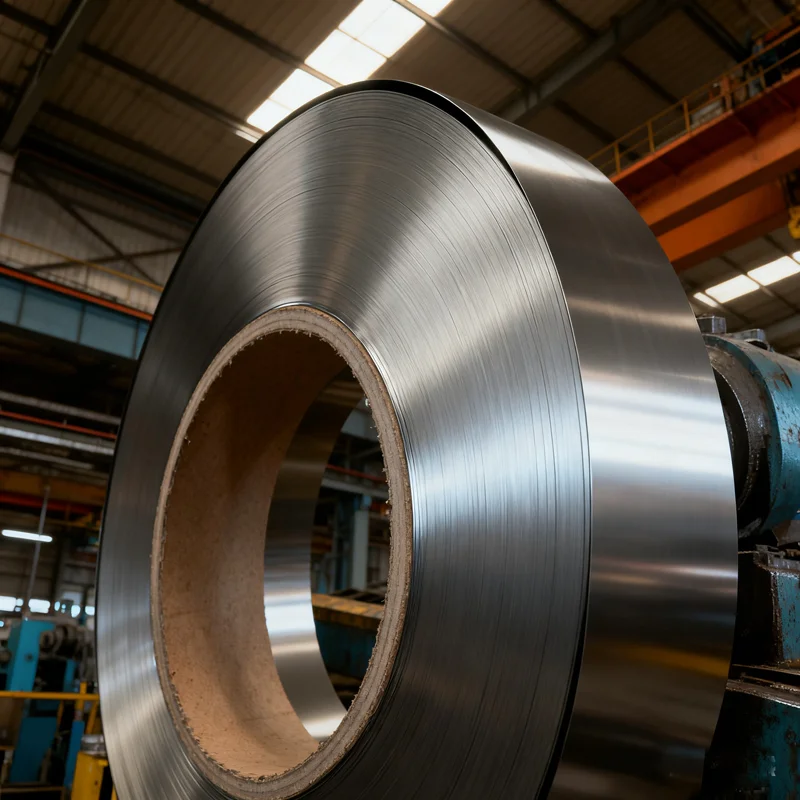
The unique composition of the 316 stainless steel coil, which includes molybdenum alongside chromium and nickel, creates an alloy specifically engineered to withstand aggressive chemical exposure and chloride-rich environments. This advanced metallurgical profile means that the 316 stainless steel coil delivers exceptional performance where standard austenitic grades would corrode or fail prematurely. The financial and operational advantages of specifying the 316 stainless steel coil become evident when examining real-world applications, industry standards, and the practical challenges faced by engineers tasked with material selection.
Superior Performance in Corrosive Chemical Environments
Chemical Processing and Pharmaceutical Manufacturing
The 316 stainless steel coil stands as the material of choice in chemical processing facilities where exposure to sulfuric acid, chlorides, and other corrosive compounds occurs regularly. Pharmaceutical manufacturers depend on the 316 stainless steel coil to fabricate storage tanks, heat exchangers, and processing equipment that must maintain absolute material integrity and purity. The molybdenum content in the 316 stainless steel coil increases resistance to pitting and crevice corrosion, ensuring equipment reliability across a wider range of chemical concentrations and temperatures. Unlike lower-grade stainless alloys that require frequent maintenance or premature replacement, the 316 stainless steel coil delivers extended service life and reduces unplanned downtime in regulated industries where production interruptions carry significant compliance and financial consequences.
Aggressive Acid and Alkali Resistance
Industrial environments containing organic acids, dilute hydrochloric acid, and bleach solutions present particular challenges for material selection. The 316 stainless steel coil exhibits markedly superior acid resistance compared to 304-grade stainless steel, making it the preferred specification when formulation or process chemistry includes aggressive compounds. When the 316 stainless steel coil is properly selected and installed, companies avoid costly material failures, product contamination, and safety incidents associated with equipment degradation. This superior acid tolerance also extends the usable temperature range for the 316 stainless steel coil, enabling performance in moderately elevated-temperature chemical processing applications where other austenitic grades would show accelerated corrosion rates.
Marine and Coastal Industrial Applications
Saltwater Exposure and Chloride Environments
Marine environments present one of the most demanding material challenges due to continuous chloride exposure and salt spray conditions. The 316 stainless steel coil excels in offshore oil and gas infrastructure, desalination plants, and coastal chemical storage facilities where chloride pitting poses an existential threat to equipment longevity. The molybdenum-enhanced composition of the 316 stainless steel coil creates a passive film far more resistant to chloride-induced pitting compared to 304-grade alternatives. Naval shipbuilders, marine equipment fabricators, and coastal industrial operators specify the 316 stainless steel coil when specifying hardware, fasteners, heat exchanger tubes, and structural components because the 316 stainless steel coil consistently outlasts lower-grade materials by years or decades depending on immersion severity.
Galvanic Isolation and Hybrid Structures
When the 316 stainless steel coil is combined with other metals or alloys in marine environments, galvanic corrosion becomes a critical consideration. The 316 stainless steel coil occupies a noble position in the galvanic series, meaning that when the 316 stainless steel coil contacts less noble metals in saltwater, the less noble material corrodes preferentially while the 316 stainless steel coil remains protected. Design engineers leverage this property of the 316 stainless steel coil to create hybrid structures and assemblies where selective corrosion of sacrificial components protects higher-value equipment. This characteristic makes the 316 stainless steel coil an intelligent choice for mixed-material marine assemblies and complex offshore structures where predictable failure modes and controlled material degradation support maintenance planning.
High-Temperature Industrial and Food Service Applications
Elevated-Temperature Performance and Oxidation Resistance
Industrial applications involving sustained elevated temperatures demand materials that resist both corrosion and oxidation across their service temperature range. The 316 stainless steel coil maintains structural integrity and corrosion resistance at temperatures where lower-grade austenitic steels begin to experience intergranular corrosion and oxidation degradation. Food service equipment manufacturers specify the 316 stainless steel coil for commercial kitchen equipment, food processing machinery, and beverage production systems that experience thermal cycling and exposure to acidic or salt-based food products. The 316 stainless steel coil withstands repeated washing cycles, sanitization protocols, and the thermal stress of commercial cooking environments without developing surface degradation or staining that would compromise sanitation or aesthetics.
Food and Beverage Production Safety Standards
Regulatory frameworks in food and beverage industries increasingly specify the 316 stainless steel coil for equipment that contacts consumable products. The 316 stainless steel coil meets FDA and European regulatory requirements for food-contact materials, and its superior corrosion resistance ensures that no metal ions migrate into product formulations. Breweries, dairies, pharmaceutical manufacturers, and prepared food processors depend on the 316 stainless steel coil to fabricate piping systems, fermentation tanks, and equipment components where product purity and regulatory compliance are non-negotiable requirements. The 316 stainless steel coil eliminates concerns about material degradation affecting product quality, safety, or shelf life, making it a cost-effective long-term investment in food safety infrastructure.
FAQ
What makes 316 stainless steel coil different from 304 stainless steel coil?
The primary difference is molybdenum content. The 316 stainless steel coil contains 2–3% molybdenum, while 304 stainless steel coil contains none. This addition dramatically improves the 316 stainless steel coil's resistance to pitting corrosion, chloride attack, and crevice corrosion. The 316 stainless steel coil is superior in aggressive chemical and marine environments, though it costs more than 304 stainless steel coil. For most general applications, 304 stainless steel coil suffices, but when chlorides, acids, or harsh conditions are present, the 316 stainless steel coil becomes the economically justified choice due to its extended service life.
Can 316 stainless steel coil be welded safely for industrial applications?
Yes, the 316 stainless steel coil is highly weldable using conventional methods including TIG, MIG, and manual arc welding. However, the 316 stainless steel coil requires careful post-weld heat treatment to avoid sensitization and intergranular corrosion, especially in high-chloride environments. The 316 stainless steel coil benefits from low-carbon variants (316L) when extensive welding is planned, as the 316L variant reduces carbon precipitation at weld heat-affected zones. Proper technique ensures that the 316 stainless steel coil maintains its superior corrosion resistance in welded assemblies. Working with experienced fabricators who understand the 316 stainless steel coil's metallurgical requirements protects equipment reliability and extends service intervals.
What temperature range does 316 stainless steel coil support?
The 316 stainless steel coil performs reliably at temperatures from cryogenic conditions up to approximately 425°C for continuous service. At moderate temperatures below 200°C, the 316 stainless steel coil offers excellent corrosion resistance across virtually all chemical environments. Above 425°C, the 316 stainless steel coil begins to lose some of its corrosion resistance advantages, and special high-temperature austenitic grades become more appropriate. For food service and pharmaceutical applications involving thermal cycling, the 316 stainless steel coil maintains its strength and corrosion resistance well within typical operating parameters. Industrial engineers should confirm the 316 stainless steel coil's suitability for specific temperature-corrosion combinations, but for most industrial applications below 400°C, the 316 stainless steel coil performs exceptionally well.