
 EN
EN

The choice between materials for interior finishing has evolved significantly in recent decades, with architects and homeowners increasingly seeking durable, aesthetically pleasing solutions that deliver long-term value. Among the most compelling options available today, the stainless steel decorative strip stands out as a superior alternative to traditional wood trim, offering unmatched durability, design flexibility, and maintenance advantages that wood simply cannot match.
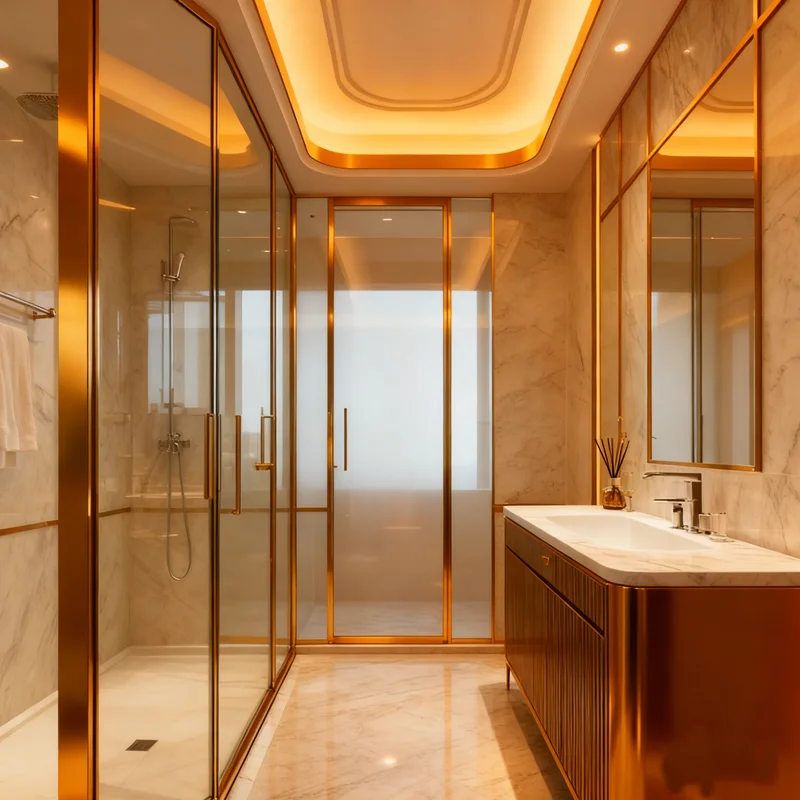
Modern construction and interior design projects demand materials that combine form and function seamlessly. While wood has served as a traditional choice for decorative trim for centuries, the limitations of organic materials become increasingly apparent in contemporary applications. Issues such as moisture sensitivity, thermal expansion, pest vulnerability, and ongoing maintenance requirements have led many professionals to explore metal alternatives that provide superior performance characteristics.
Durability and Longevity Advantages
Superior Resistance to Environmental Factors
The fundamental advantage of choosing a stainless steel decorative strip over wood lies in its exceptional resistance to environmental degradation. Unlike wood, which absorbs moisture and undergoes dimensional changes that can lead to warping, cracking, and splitting, stainless steel maintains its structural integrity regardless of humidity fluctuations or temperature variations. This stability makes it particularly valuable in high-moisture environments such as bathrooms, kitchens, and commercial spaces where traditional wood trim would require frequent replacement or refinishing.
Corrosion resistance represents another critical advantage of stainless steel decorative strip applications. The chromium content in stainless steel forms a protective oxide layer that prevents rust and corrosion, ensuring that the material maintains its appearance and structural properties for decades without deterioration. This inherent protection eliminates the need for protective coatings or treatments that wood requires to achieve similar longevity, resulting in both cost savings and reduced maintenance requirements over the product lifecycle.
Impact Resistance and Structural Integrity
Physical durability represents a significant consideration in material selection, particularly in high-traffic areas or commercial applications. A properly installed stainless steel decorative strip can withstand impact forces that would damage or dent wood trim, making it an ideal choice for areas subject to regular wear and tear. The inherent strength of steel provides resistance to denting, scratching, and other forms of mechanical damage that commonly affect softer materials like wood.
The dimensional stability of stainless steel decorative strip installations also contributes to their longevity advantage. While wood expands and contracts with seasonal moisture changes, potentially creating gaps or buckling, stainless steel maintains consistent dimensions throughout varying environmental conditions. This stability ensures that installations remain aesthetically pleasing and functionally effective over extended periods without requiring adjustment or replacement.
Design Versatility and Aesthetic Appeal
Contemporary Design Integration
Modern interior design trends emphasize clean lines, minimalist aesthetics, and the integration of industrial elements into residential and commercial spaces. The stainless steel decorative strip perfectly complements these design philosophies, offering sleek profiles that enhance rather than distract from architectural features. The reflective properties of stainless steel can also help amplify natural light within spaces, creating a brighter, more open atmosphere that wood trim cannot achieve.
The versatility of stainless steel decorative strip manufacturing allows for extensive customization options that wood cannot match. Modern fabrication techniques enable the creation of complex profiles, precise angles, and custom dimensions that accommodate unique architectural requirements. Whether creating seamless transitions between different materials, defining edges, or serving as accent elements, stainless steel strips can be engineered to exact specifications without the limitations imposed by wood grain direction or natural defects.
Surface Finish Options and Customization
The range of available surface finishes for stainless steel decorative strip applications extends far beyond what natural wood can offer. From mirror-bright polished surfaces to subtle brushed textures, matte finishes, and even colored coatings, stainless steel can be customized to complement virtually any design scheme. These finish options remain consistent throughout the material, unlike wood stains or paints that may wear unevenly or require periodic renewal to maintain their appearance.
Advanced manufacturing processes also enable the creation of textured surfaces, embossed patterns, and decorative perforations in stainless steel decorative strip products. These options provide designers with creative possibilities that would be impossible or impractical to achieve with wood trim, allowing for unique architectural details that serve both functional and aesthetic purposes while maintaining the material's inherent durability advantages.
Maintenance and Cost Considerations
Long-Term Maintenance Requirements
The maintenance advantages of stainless steel decorative strip installations become apparent immediately upon installation and continue throughout the product's service life. Unlike wood trim, which requires periodic sanding, staining, or painting to maintain its appearance and protect against moisture damage, stainless steel requires only routine cleaning with standard household cleaners to maintain its original appearance. This simplicity translates into significant labor cost savings over time, particularly in commercial applications where maintenance costs can substantially impact operational budgets.
The hygienic properties of stainless steel decorative strip materials make them particularly valuable in healthcare, food service, and other environments where cleanliness is paramount. The non-porous surface prevents bacterial growth and can be easily sanitized using standard cleaning protocols, capabilities that wood trim cannot match without compromising its structural integrity or appearance through repeated exposure to harsh cleaning agents.
Lifecycle Cost Analysis
While the initial cost of stainless steel decorative strip materials may exceed that of wood alternatives, a comprehensive lifecycle cost analysis reveals the economic advantages of metal trim over extended periods. The elimination of refinishing costs, replacement expenses, and maintenance labor results in lower total ownership costs, particularly when factoring in the extended service life that stainless steel provides compared to wood trim applications.
Insurance and liability considerations also favor stainless steel decorative strip installations. The fire resistance, mold resistance, and pest immunity of stainless steel can contribute to lower insurance premiums and reduced liability exposure in commercial applications. These factors, combined with the reduced maintenance requirements and extended service life, create compelling economic arguments for choosing stainless steel over wood trim in both residential and commercial projects.
Installation and Performance Benefits
Installation Efficiency and Precision
The installation process for stainless steel decorative strip products offers several advantages over wood trim applications. The dimensional consistency of manufactured steel strips ensures precise fit and alignment, eliminating the variations in dimension and profile that can complicate wood trim installations. This consistency allows for faster installation times and reduces the likelihood of installation errors that can compromise the final appearance of the project.
Pre-fabricated stainless steel decorative strip components can be manufactured to exact specifications off-site, reducing on-site cutting and fitting requirements. This approach minimizes installation time, reduces waste, and ensures more precise results than field-cutting wood trim, which must accommodate natural variations in grain and density that can affect cutting accuracy and edge quality.
Thermal and Acoustic Performance
The thermal conductivity properties of stainless steel decorative strip installations can contribute to improved building performance in certain applications. While this characteristic requires consideration in thermal bridging applications, it can also be advantageous in situations where heat dissipation or thermal mass is desired. The material's stability across temperature ranges ensures consistent performance without the expansion and contraction issues that affect wood trim in temperature-varying environments.
Acoustic performance represents another area where stainless steel decorative strip applications can provide advantages over wood alternatives. The density and rigidity of steel can help reduce vibration transmission and improve the acoustic properties of wall and ceiling assemblies, contributing to better sound control in commercial and residential applications where noise management is important.
Environmental and Sustainability Factors
Recyclability and Environmental Impact
The environmental advantages of stainless steel decorative strip materials extend throughout their lifecycle, from production through end-of-life disposal. Stainless steel is infinitely recyclable without loss of properties, meaning that decorative strips can be reclaimed and reprocessed into new products at the end of their service life. This recyclability contrasts favorably with wood trim, which typically ends up in landfills or is burned for energy recovery, both of which represent less environmentally favorable disposal options.
The production of stainless steel decorative strip products typically involves significant recycled content, with many manufacturers using substantial percentages of post-consumer recycled steel in their production processes. This approach reduces the environmental impact associated with raw material extraction and processing, making stainless steel trim a more sustainable choice than wood harvested from old-growth or managed forests.
Resource Conservation and Longevity
The extended service life of stainless steel decorative strip installations contributes to resource conservation by reducing replacement frequency. While wood trim may require replacement every 10-15 years in demanding applications, properly installed stainless steel strips can provide decades of service without deterioration. This longevity reduces the ongoing demand for replacement materials and the associated environmental impacts of manufacturing, transportation, and installation activities.
The elimination of chemical treatments, stains, and protective coatings required for wood trim also reduces the environmental impact associated with stainless steel decorative strip applications. Wood preservation chemicals, many of which contain volatile organic compounds or other potentially harmful substances, are unnecessary with stainless steel, contributing to better indoor air quality and reduced environmental contamination.
FAQ
How does the cost of stainless steel decorative strips compare to wood trim over time
While stainless steel decorative strip materials typically have a higher initial cost than wood trim, the total lifecycle cost is often lower due to eliminated maintenance requirements, longer service life, and no need for periodic refinishing. The absence of replacement costs and reduced maintenance labor typically result in cost savings within 5-7 years of installation, with continued savings throughout the extended service life of the stainless steel trim.
Can stainless steel decorative strips be installed in moisture-prone areas where wood would fail
Yes, stainless steel decorative strip materials excel in high-moisture environments such as bathrooms, kitchens, and commercial food service areas where wood trim would be prone to swelling, warping, and mold growth. The corrosion resistance and dimensional stability of stainless steel make it ideal for these challenging applications, providing long-term performance without the deterioration that affects wood in similar conditions.
What design options are available for stainless steel decorative strips compared to wood
Stainless steel decorative strip products offer extensive customization options including various surface finishes, custom profiles, precise dimensions, and even textured or patterned surfaces. Unlike wood, which is limited by natural grain patterns and standard milled profiles, stainless steel can be manufactured to exact specifications with consistent quality throughout each piece, enabling unique architectural details that complement contemporary design trends.
Are there any special installation considerations for stainless steel decorative strips
Installation of stainless steel decorative strip materials requires appropriate fasteners and techniques to prevent galvanic corrosion and ensure secure attachment. Professional installation is recommended to achieve optimal results, particularly in applications involving precise alignment or complex geometries. The dimensional consistency of manufactured steel strips actually simplifies installation compared to wood trim, which must accommodate natural variations in dimension and profile.
Table of Contents
- Durability and Longevity Advantages
- Design Versatility and Aesthetic Appeal
- Maintenance and Cost Considerations
- Installation and Performance Benefits
- Environmental and Sustainability Factors
-
FAQ
- How does the cost of stainless steel decorative strips compare to wood trim over time
- Can stainless steel decorative strips be installed in moisture-prone areas where wood would fail
- What design options are available for stainless steel decorative strips compared to wood
- Are there any special installation considerations for stainless steel decorative strips