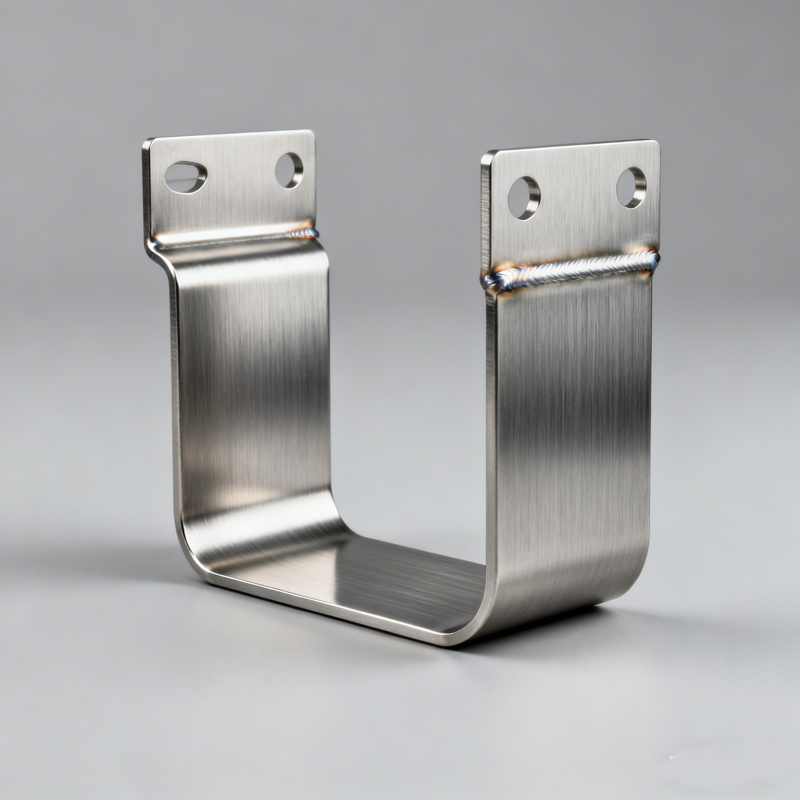
Professional Metal Bending Services - Precision Fabrication Solutions

All Categories

Get a Free Quote

Our representative will contact you soon.
Email
Name
Company Name
Message
0/1000

bending metal process

The bending metal process is a fundamental manufacturing technique that shapes metal sheets, bars, rods, and tubes into desired angles and curves through the application of controlled force. This versatile fabrication method utilizes specialized machinery, including press brakes, roll benders, and tube benders, to manipulate metal materials without compromising their structural integrity. The bending metal process operates on the principle of plastic deformation, where materials are stressed beyond their elastic limit to create permanent dimensional changes while maintaining their essential properties. Manufacturing facilities employ various bending techniques such as air bending, coining, and bottoming to achieve precise angular measurements and consistent results across production runs. The technological framework supporting the bending metal process incorporates advanced hydraulic systems, computer numerical control (CNC) programming, and precision tooling to ensure accurate repeatability. Modern equipment features programmable back gauges, automatic tool changers, and real-time monitoring systems that enhance productivity and quality control. The bending metal process accommodates diverse materials including aluminum, steel, stainless steel, copper, and specialized alloys, each requiring specific parameters for optimal results. Temperature considerations play a crucial role, with cold bending techniques suitable for most applications and hot bending reserved for thicker materials or complex geometries. Quality assurance measures integral to the bending metal process include dimensional verification, surface finish inspection, and stress analysis to prevent cracking or material failure. Applications span numerous industries from automotive and aerospace to construction and electronics, where the bending metal process creates components ranging from simple brackets to complex architectural elements. The process efficiency depends on factors such as material thickness, bend radius, tooling selection, and operator expertise, making proper planning essential for successful implementation.

New Products

The bending metal process delivers exceptional cost-effectiveness compared to alternative shaping methods, eliminating the need for expensive welding operations or complex assembly procedures. Manufacturers benefit from reduced material waste since the bending metal process works with single pieces rather than multiple components requiring joining. This efficiency translates directly to lower production costs and improved profit margins for businesses across various sectors. Speed represents another significant advantage of the bending metal process, with modern equipment capable of completing complex bends in seconds rather than hours required by traditional machining methods. Production schedules become more predictable and manageable when incorporating the bending metal process into manufacturing workflows. The versatility offered by the bending metal process enables manufacturers to create diverse product lines using standardized equipment and tooling configurations. Design flexibility increases substantially since engineers can specify complex geometries without worrying about assembly constraints or joint limitations. Quality consistency emerges as a standout benefit of the bending metal process, with computer-controlled systems ensuring identical results across thousands of parts. This reliability reduces rejection rates and eliminates costly rework operations that plague less precise manufacturing methods. Strength characteristics improve through the bending metal process because continuous material fibers follow bend contours without interruption, creating stronger components than welded assemblies. The elimination of heat-affected zones common in welding preserves original material properties throughout bent sections. Environmental benefits accompany the bending metal process through reduced energy consumption compared to cutting and welding operations. Material utilization improves significantly since the bending metal process minimizes scrap generation and supports sustainable manufacturing practices. Maintenance requirements remain minimal for bending equipment, reducing operational downtime and service costs. Skilled operators can quickly master the bending metal process, making workforce training efficient and cost-effective. Storage and handling advantages result from creating finished parts without separate fasteners or joining materials. The bending metal process supports just-in-time manufacturing strategies by enabling rapid response to changing production demands.

Practical Tips

Why Is Stainless Steel Grating Ideal for High-Load Environments?

17

Dec

Why Is Stainless Steel Grating Ideal for High-Load Environments?

In industrial and commercial environments where heavy loads and constant traffic are the norm, selecting the right flooring and drainage solutions becomes critical for operational safety and efficiency. Stainless steel grating has emerged as the pref...
View More
What Makes Stainless Steel Trash Cans So Popular?

15

Jan

What Makes Stainless Steel Trash Cans So Popular?

Modern households and commercial spaces increasingly prioritize functionality, durability, and aesthetic appeal when selecting waste management solutions. Among the various options available, stainless steel waste containers have emerged as the prefe...
View More
Why Are Stainless Steel Flower Boxes a Durable Choice for Modern Spaces?

06

Feb

Why Are Stainless Steel Flower Boxes a Durable Choice for Modern Spaces?

Modern urban landscapes demand planters that combine aesthetic appeal with exceptional durability, making the stainless steel flower box an increasingly popular choice among architects, landscape designers, and facility managers. These sophisticated ...
View More
Where Are Linear Drainage Ditches Most Effective in Construction Projects?

17

Feb

Where Are Linear Drainage Ditches Most Effective in Construction Projects?

Construction projects across various industries require efficient water management systems to prevent structural damage, erosion, and safety hazards. Among the most versatile and effective solutions available today is the linear drainage ditch, a spe...
View More

Get a Free Quote

Our representative will contact you soon.
Email
Name
Company Name
Message
0/1000

bending metal process

Precision Engineering Excellence Through Advanced Control Systems

Precision Engineering Excellence Through Advanced Control Systems

The bending metal process achieves unparalleled precision through sophisticated control systems that monitor and adjust parameters in real-time throughout each operation. Modern CNC-controlled equipment integrates multiple sensors and feedback mechanisms to ensure consistent angle accuracy within tolerances as tight as plus or minus 0.1 degrees. This level of precision stems from advanced servo-motor technology that controls ram positioning, back gauge movement, and pressure application with microscopic accuracy. The bending metal process benefits from programmable logic controllers that store thousands of job parameters, automatically adjusting machine settings based on material specifications, thickness variations, and desired bend angles. Operators can recall previous job setups instantly, eliminating setup time and reducing the potential for human error during production runs. Quality control systems embedded within the bending metal process continuously monitor force application, material positioning, and dimensional accuracy throughout each cycle. Automatic compensation features adjust for material spring-back characteristics, ensuring final dimensions match engineering specifications regardless of material variations. The precision capabilities of the bending metal process extend to complex multi-bend sequences where each subsequent bend must maintain exact relationships to previous formations. Advanced software calculates bend allowances, deduction factors, and sequence optimization to prevent collisions while maintaining dimensional accuracy. Laser measurement systems provide real-time feedback during the bending metal process, instantly detecting deviations and triggering corrective actions before defective parts are produced. This technological integration results in dramatically reduced scrap rates and enhanced customer satisfaction through consistent delivery of precision components. The repeatability achieved through the bending metal process enables manufacturers to guarantee dimensional consistency across production lots, supporting lean manufacturing principles and reducing inventory requirements. Statistical process control capabilities built into modern bending equipment provide comprehensive documentation of dimensional variations, supporting quality certification requirements and continuous improvement initiatives.
Exceptional Material Versatility and Adaptability

Exceptional Material Versatility and Adaptability

The bending metal process demonstrates remarkable adaptability across an extensive range of materials, thicknesses, and geometric configurations, making it an invaluable solution for diverse manufacturing requirements. This versatility extends from thin gauge aluminum sheets measuring just 0.5mm to heavy steel plates exceeding 25mm thickness, all processed using appropriately configured bending equipment. The bending metal process accommodates materials with vastly different mechanical properties, including high-strength steels, corrosion-resistant alloys, and specialized metals used in aerospace applications. Advanced tooling systems support the bending metal process across this material spectrum, with interchangeable dies and punches optimized for specific material characteristics and bend requirements. Exotic materials such as titanium, Inconel, and specialized composites respond effectively to the bending metal process when proper parameters and tooling are employed. The process adapts seamlessly to varying production volumes, from prototype quantities requiring quick setup changes to high-volume runs demanding maximum efficiency and consistency. Geometric flexibility represents a significant strength of the bending metal process, enabling the creation of simple single bends, complex multi-bend configurations, and intricate three-dimensional shapes within a single setup. Box and pan formations, hemmed edges, and compound angles are easily achieved through the bending metal process without requiring multiple operations or specialized fixtures. The process accommodates both symmetric and asymmetric bend patterns, supporting innovative design concepts that would be prohibitively expensive using alternative manufacturing methods. Material grain direction considerations are automatically incorporated into the bending metal process through intelligent programming that optimizes bend orientation for maximum strength and appearance. Surface finish preservation during the bending metal process ensures that pre-finished materials maintain their coating integrity and aesthetic appeal throughout forming operations. The adaptability of the bending metal process extends to custom applications where standard tooling modifications or specialized fixtures enable unique forming requirements. This flexibility supports rapid prototyping initiatives and design validation processes that require quick turnaround times and minimal tooling investment.
Superior Structural Integrity and Performance Characteristics

Superior Structural Integrity and Performance Characteristics

The bending metal process creates components with exceptional structural integrity by maintaining continuous material fibers throughout bent sections, resulting in strength characteristics that often exceed those of welded or mechanically fastened assemblies. This fundamental advantage stems from the cold working nature of the bending metal process, which actually increases material strength in bend areas through work hardening effects. Unlike joining processes that create potential failure points at connection interfaces, the bending metal process produces monolithic structures with uniform strength distribution throughout the component. Stress concentration factors remain minimal in properly executed bends, as the gradual radius transition distributes loads evenly across the formed section. The bending metal process eliminates the heat-affected zones common in welding operations, preserving original material properties and preventing the brittleness or softening that can compromise component performance. Fatigue resistance improves significantly in bent components compared to welded alternatives, as the continuous material structure eliminates stress risers at joint locations. The bending metal process enables the creation of closed sections and hollow structures that provide exceptional stiffness-to-weight ratios for applications demanding maximum performance with minimum material usage. Corrosion resistance benefits from the bending metal process through the elimination of crevices and gaps common in assembled structures where moisture and contaminants can accumulate. Surface treatments and coatings maintain their effectiveness throughout the bending metal process, ensuring long-term protection without the coating damage typical of welding operations. The monolithic nature of bent components reduces maintenance requirements by eliminating fasteners, welds, and joints that require periodic inspection and service. Quality consistency achieved through the bending metal process ensures uniform performance characteristics across production quantities, supporting reliability predictions and warranty programs. Load distribution improvements result from the smooth transitions created during the bending metal process, enabling components to handle higher stress levels than comparable assembled alternatives. The elimination of residual stresses common in welded structures prevents distortion and dimensional instability that can affect component performance over time. Environmental resistance increases through the bending metal process as sealed edges and continuous surfaces provide superior protection against chemical exposure and weathering effects.

Get a Free Quote

Our representative will contact you soon.
Email
Name
Company Name
Message
0/1000